San Tan Valley, AZ • Pinal County Masonry
Block Wall Contractors in San Tan Valley, AZ
Free on-site estimate. No obligation.
Our Featured Contractor
Meet Our Featured Contractor
5-star rated on Google
San Tan Block Walls works with a licensed Arizona block wall and concrete contractor with over 15 years of experience. Request a quote here and our featured contractor comes out to look at the job. Your written estimate, contract and warranty come directly from his company, with its license number on the paperwork.
“Amazing work!! Very reliable, quality work. I really liked working with [our contractor], he was excellent with customer service and replying/communication. Reasonable price and timely work.”
“[Our contractor] came out to give us an estimate and was very courteous and professional. … The crew were also very professional and neat.”
“The quality of the work was excellent and the service even better!”
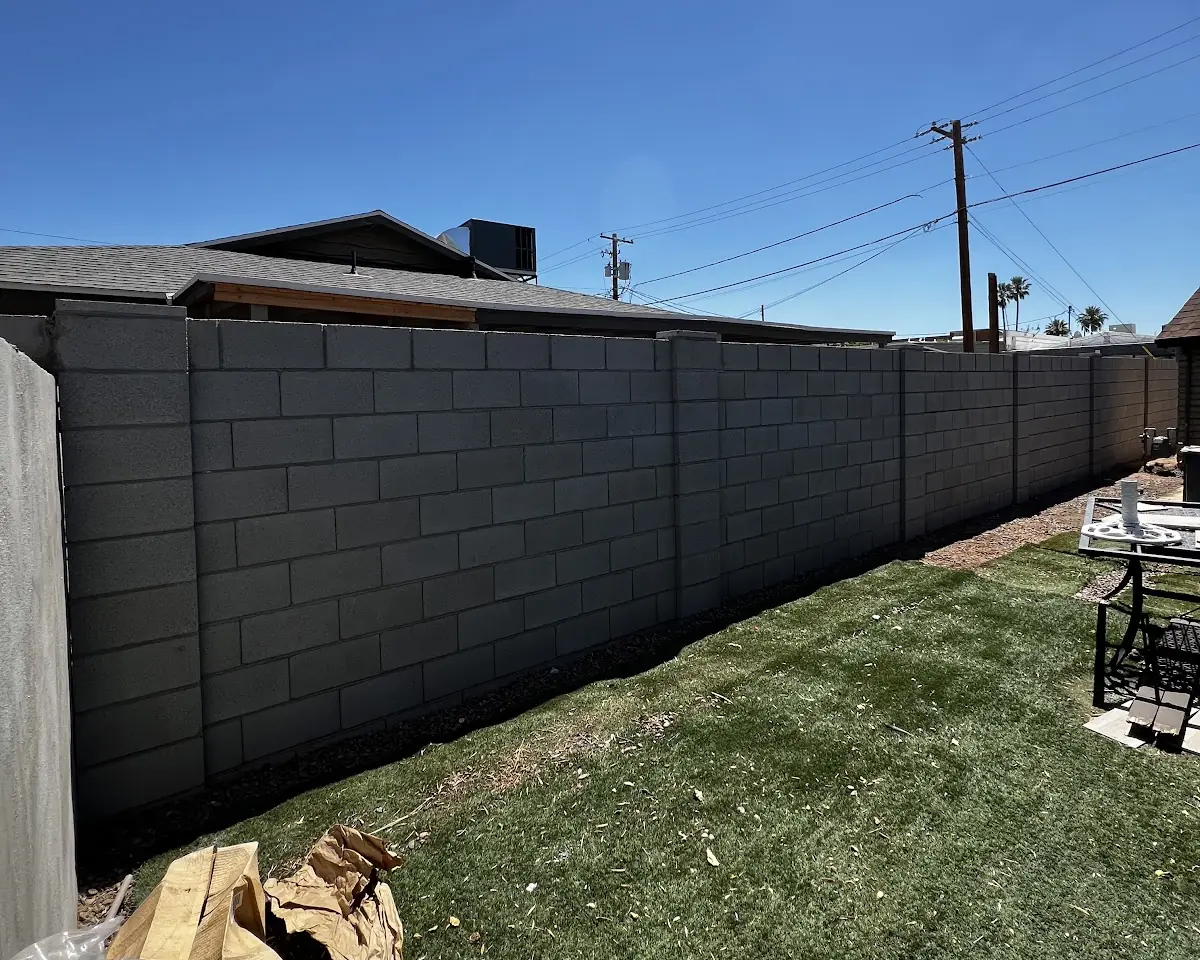
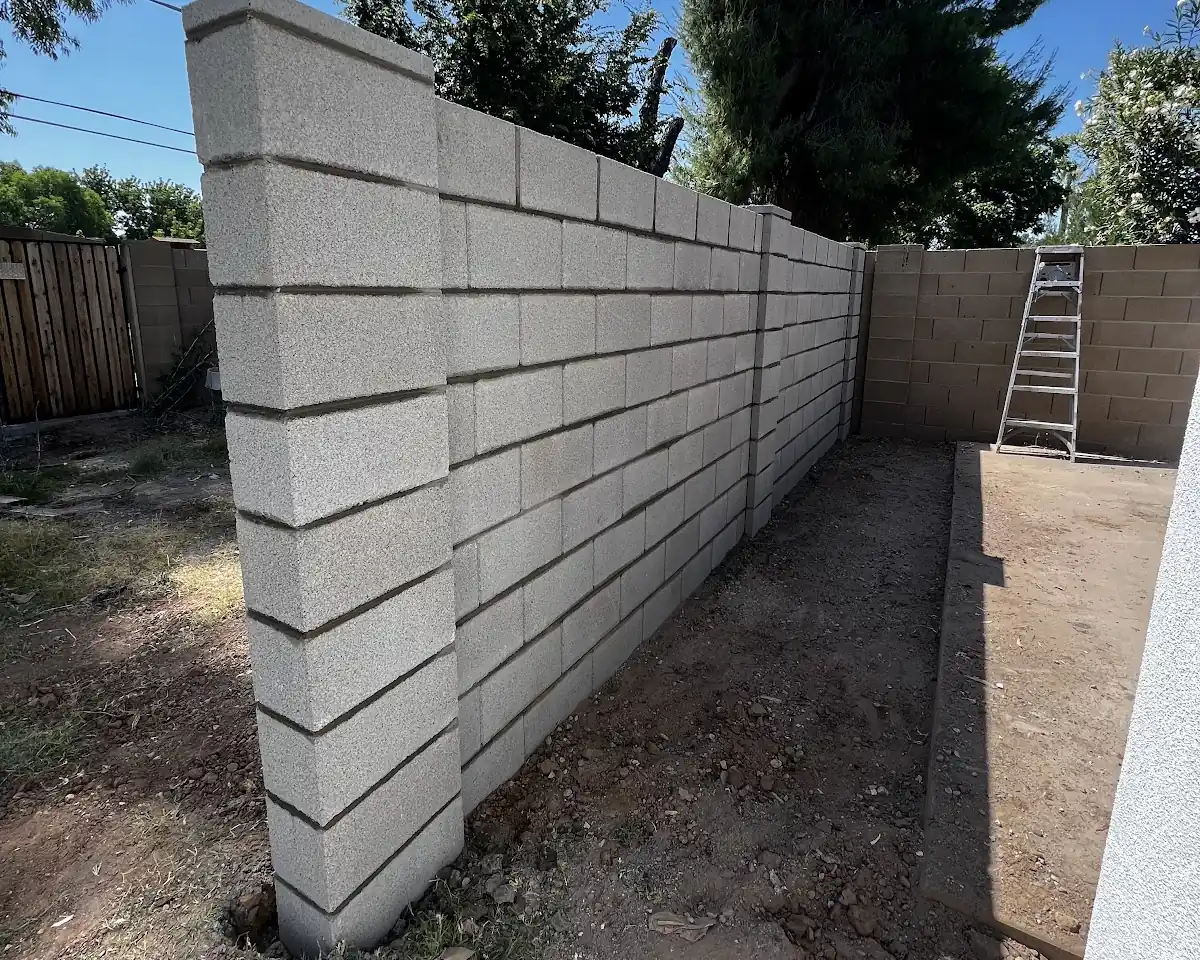
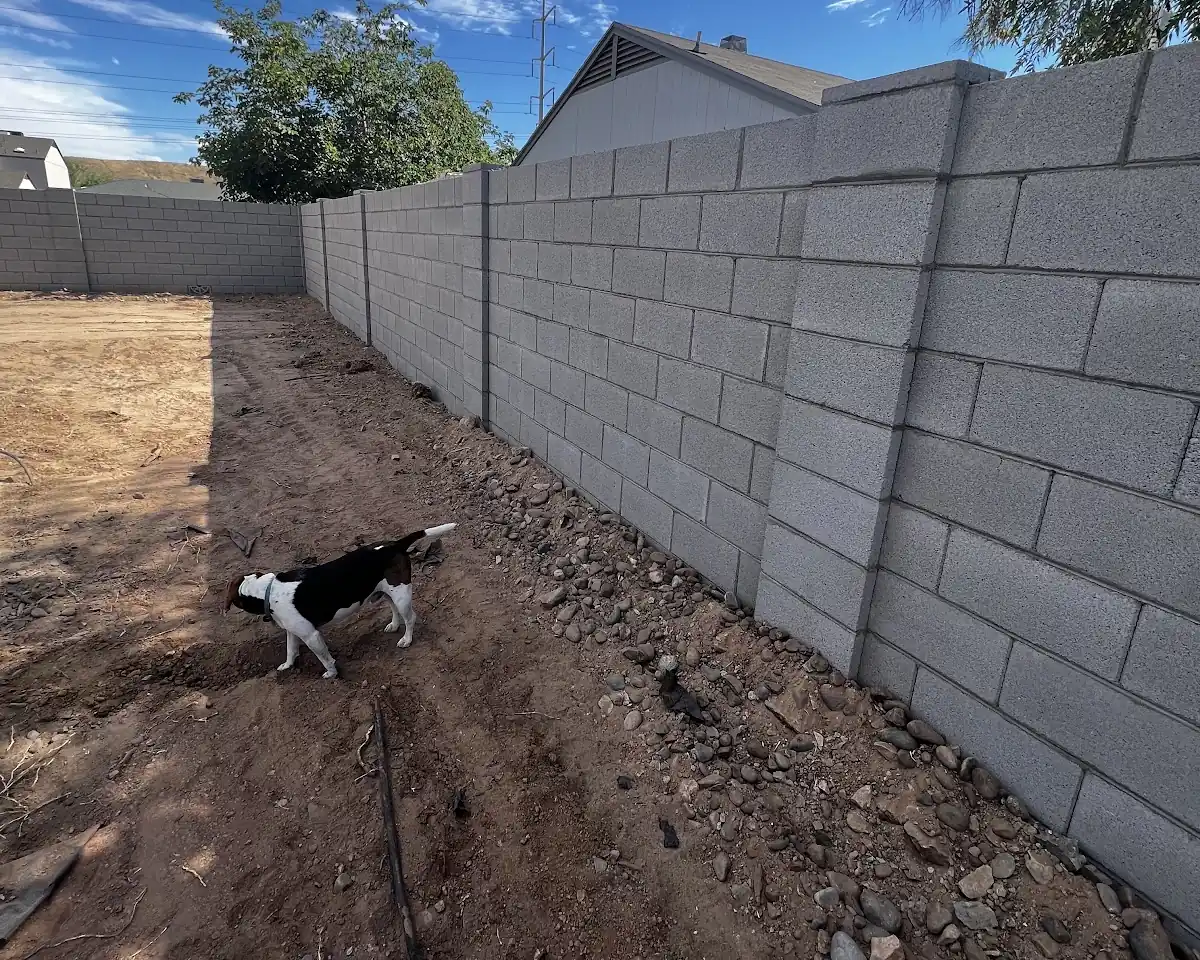
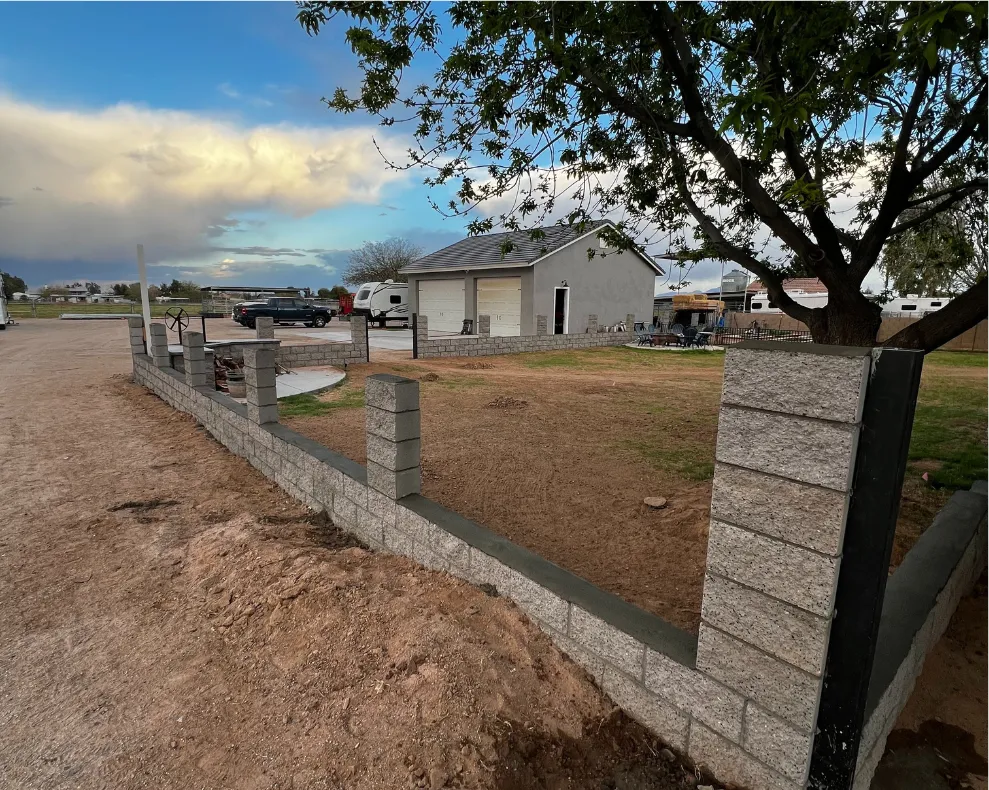
Project photos: our featured contractor's own completed jobs.
Block Wall Services in San Tan Valley AZ
Coverage runs across San Tan Valley and Pinal County for homeowners, HOAs, and builders, and throughout Apache Junction for both new block fence installation and repair. For the statewide technical side of the trade, including unit specification, fire ratings and county engineering thresholds, see our CMU Wall Contractor Arizona guide.
Block Wall Installation
New CMU block wall construction for residential perimeters, subdivision lots, and HOA-compliant backyard privacy walls in San Tan Valley and Pinal County.
Details →Block Wall Repair
Cracked mortar joints, leaning panels, and monsoon damage repaired. Footings reset, failed sections rebuilt, and deteriorating walls tuck-pointed throughout Pinal County.
Details →Retaining Walls
CMU retaining walls for slope stabilization, grade changes, and landscaping features. Engineered footings to handle Arizona expansive soil and caliche layers.
Details →Gate Pillars & Masonry
Block pillar construction for driveway entries, RV gates, and decorative masonry accents. Split-face and slump block finish options available.
Details →CMU Wall Contractor Arizona
Statewide CMU work: ASTM C90 unit specification, engineered reinforcement schedules, fire rated assemblies, and the Maricopa and Pinal County height thresholds that decide whether your wall needs a seal.
Details →Built for Pinal County's Caliche Soil and HOA Requirements
San Tan Block Walls covers CMU block wall building and repair throughout San Tan Valley and Pinal County. Most subdivisions in San Tan Valley require block walls by HOA rule, not just because of preference. Wood fences rot and termites destroy them within a few years in Arizona's Sonoran Desert heat. Block is the practical standard, and it's what every builder and HOA in this area expects.
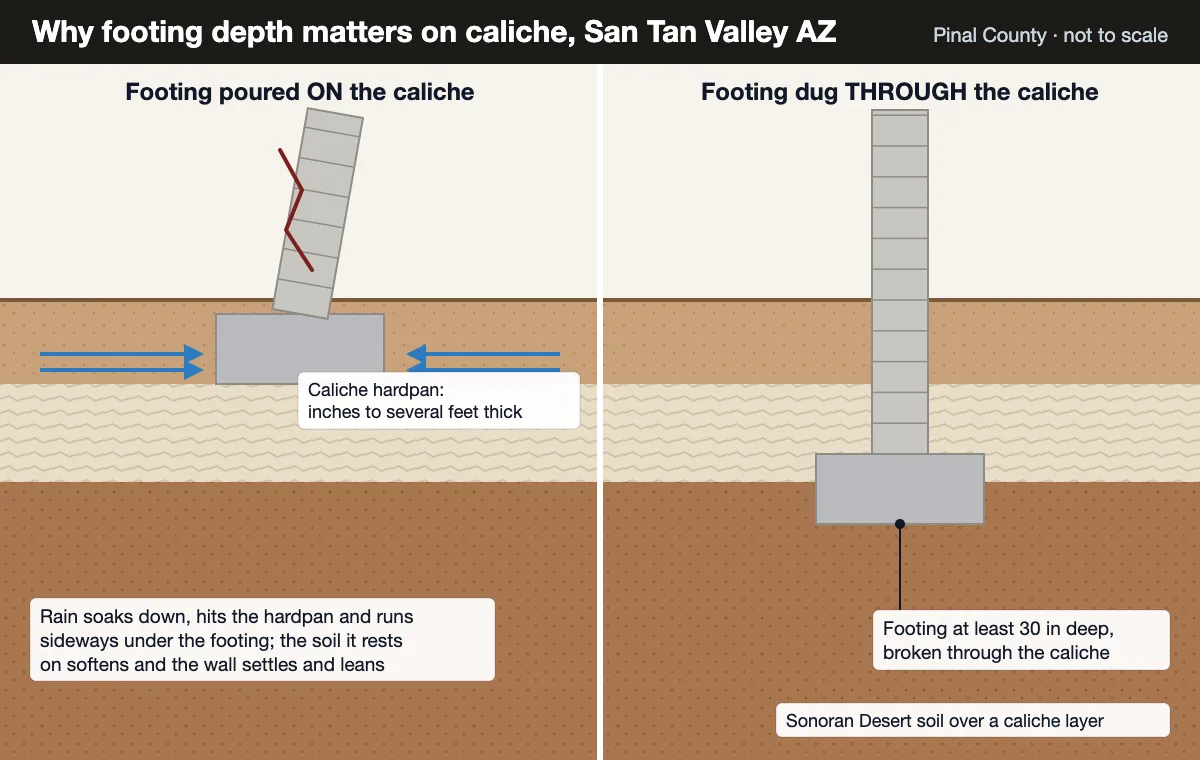
The challenge in San Tan Valley is the soil. Pinal County sits on Sonoran Desert soils with significant caliche layers, a calcium carbonate hardpan that can run from a few inches to several feet below grade. Footings poured on top of caliche shift as water migrates laterally, cracking the wall above. A sound footing breaks through to stable native soil, typically 30 inches or deeper, so ask any bidder how deep they dig. That's the difference between a wall that lasts 30 years and one that fails in five monsoon seasons.
The second local factor is the calendar. Arizona's monsoon runs June 15 through September 30, and the outflow winds ahead of those storms have pushed gusts of 50 to 70 mph across south-central Arizona. A wall with continuous vertical rebar tied into a deep footing and grouted cells takes that in stride. A wall stacked on a shallow footing with hollow cells is the one you find lying in the yard the next morning. Between the wind and the 104 degree summers that cycle the block through daily expansion and contraction, this is not a market where a merely adequate wall survives.
Pinal County is Arizona's fastest-growing county. Over 13,000 home sites have been approved in San Tan Valley, with thousands more in the pipeline. Every new lot needs a perimeter wall, and every aging subdivision, Johnson Ranch chief among them at close to thirty years old now, has walls that need repair.
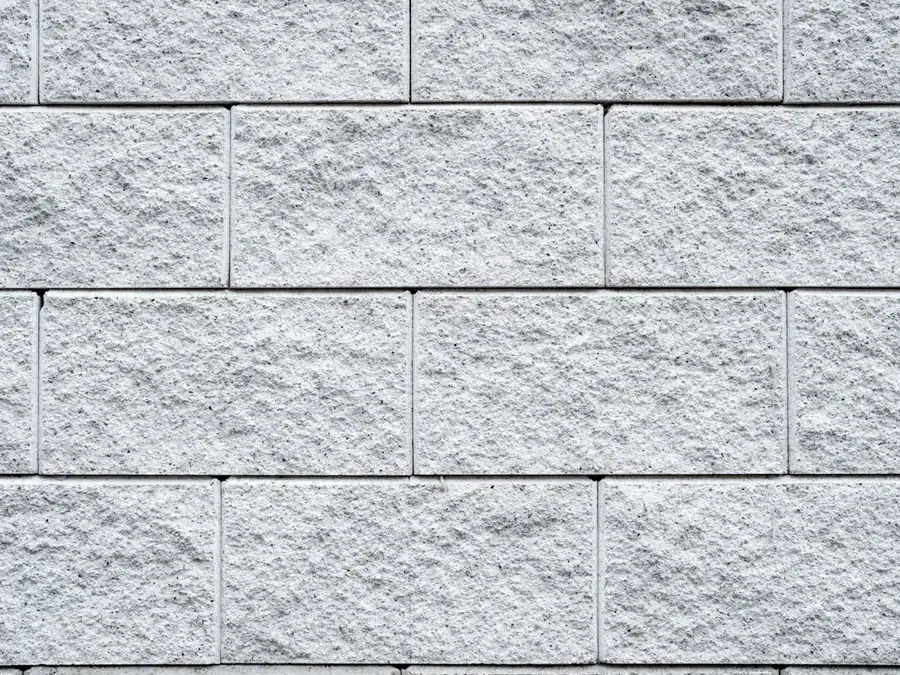
Types of Block Wall Built in San Tan Valley
Nearly every residential masonry job in San Tan Valley falls into one of six shapes. Knowing which one you have tells you roughly what it costs, whether it needs a permit, and what your HOA is going to ask for.
6-Foot Perimeter Privacy Wall
The default backyard wall across San Tan Valley. Standard 8 inch by 8 inch by 16 inch concrete masonry units laid six courses high on a continuous footing, with vertical rebar and grout in the cells at the spacing the wall height calls for. This is what nearly every HOA in Johnson Ranch, Circle Cross Ranch, and Skyline Ranch expects on a rear or side lot line.
Side Yard and Return Walls
Short runs tying the house to the perimeter wall, usually with a gate opening for trash or side yard access. Because the run is short, the per-foot price is higher than a long perimeter. It is usually more economical to bundle return walls into a larger job than to have a crew mobilize for 20 feet of block.
Front Yard and Courtyard Walls
In the front yard setback, Pinal County zoning (PCDSC 2.150.100) allows fencing up to 5 feet only when the part above 3 feet is open, or 6 feet when the whole fence is wrought iron or pipe rail. Solid block stops at 3 feet there, with view fence or iron above it. Courtyard walls, planter walls, and low seat walls are where most front yard masonry work lands in San Tan Valley as a result.
RV Gate Openings and Pillars
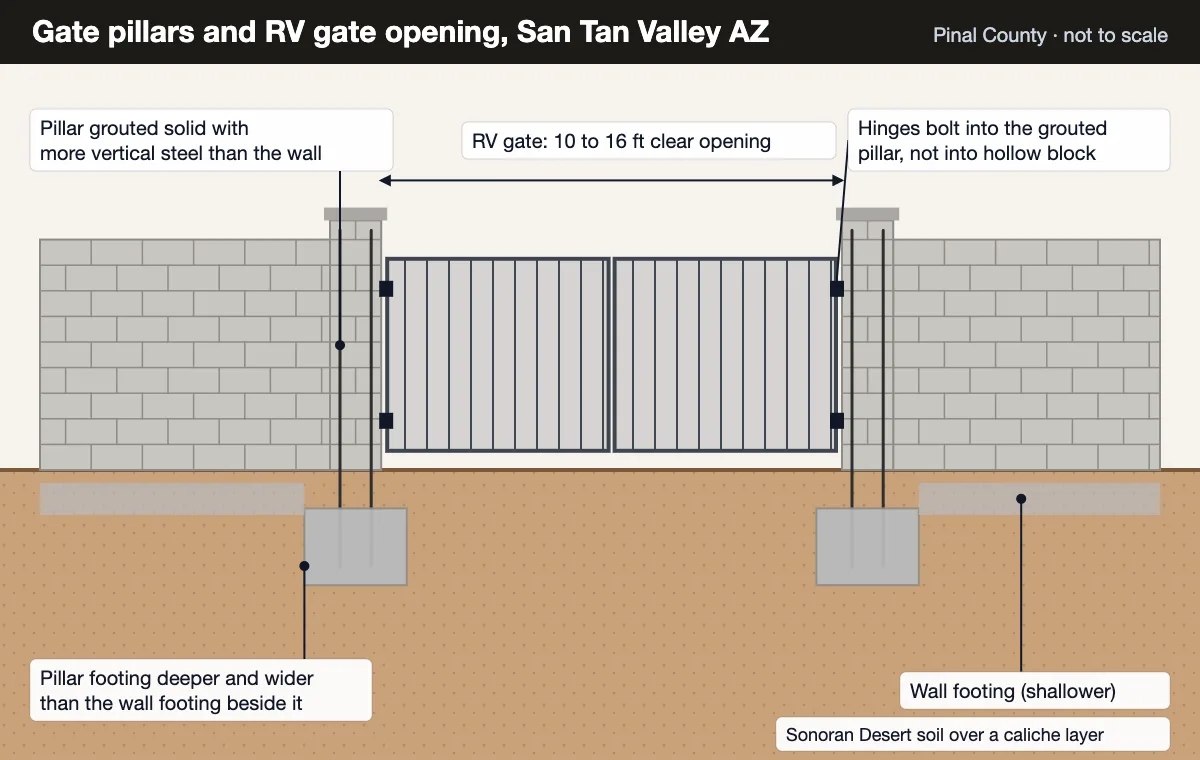
San Tan Valley lots are wide compared to inner Phoenix, and RV parking is one of the reasons people move out here. An RV gate means a wider opening in the block run, a pair of grouted pillars with heavier rebar to carry the gate hardware, and a footing at those pillars that is deeper and wider than the wall footing beside it.
Pool Barrier Walls
Arizona pool barrier law sets a 5 foot minimum height for the enclosure around a residential pool, with self-closing and self-latching gates. A 6 foot perimeter block wall satisfies the outer barrier on most San Tan Valley lots, but the gates in that wall have to be specified correctly or the barrier does not pass.
Noise and Arterial Buffer Walls
Lots backing Hunt Highway, Gantzel Road, Combs Road, or Bella Vista Road take road noise and headlight glare. A taller solid wall helps, but above 6 feet the wall no longer qualifies to sit on the lot line under the county zoning code and has to meet setbacks, and anything over 7 feet measured from finished grade requires a Pinal County permit and engineer stamped plans, so most buffer walls stop at 6 feet with a fully grouted core.
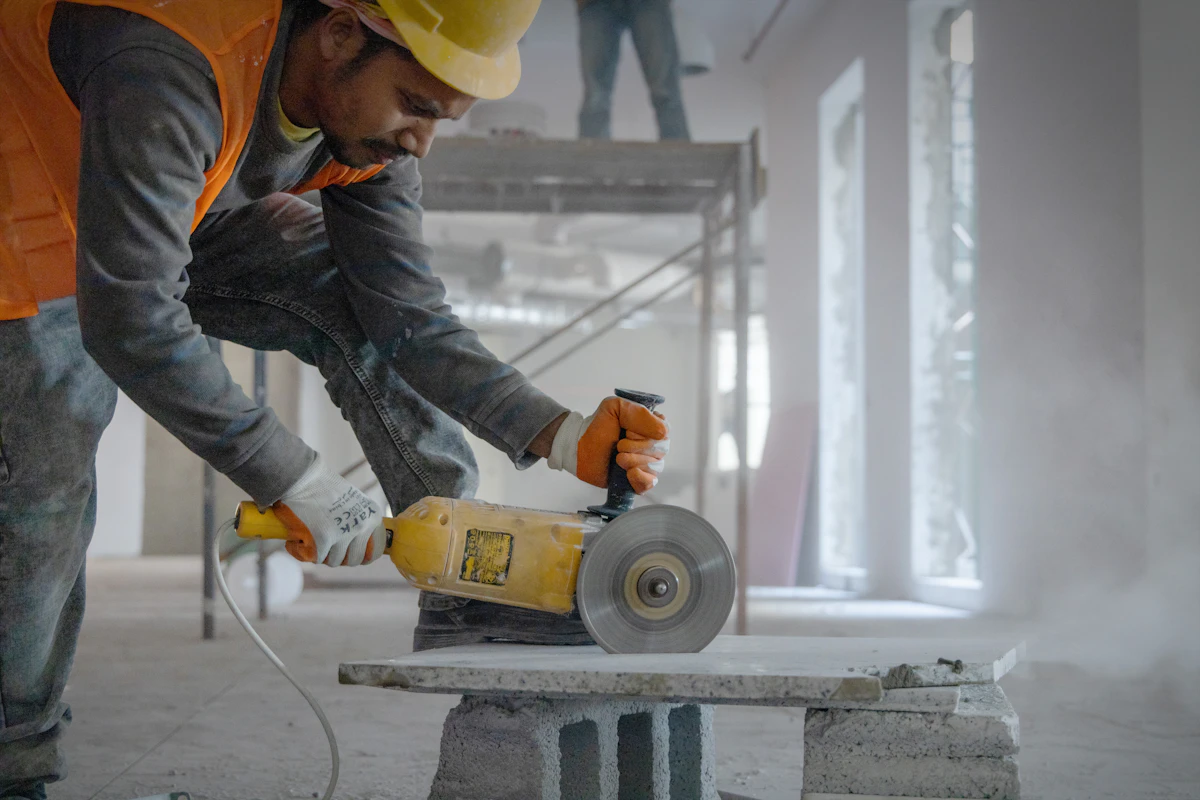
Block Wall Materials for Arizona's Climate
San Tan Valley summers hit 104 degrees or higher, and monsoon season brings concentrated rainfall that can undermine poorly set walls. A well-built wall uses materials rated for Arizona's thermal cycling and moisture conditions, with proper drainage provisions to prevent hydrostatic pressure buildup behind the block.
Standard gray CMU is the workhorse of Pinal County block walls. For decorative finishes, split-face block gives a textured, upscale look that most San Tan Valley HOAs accept. Slump block and stucco coat options are available for a Southwestern finish that blends with the regional aesthetic.
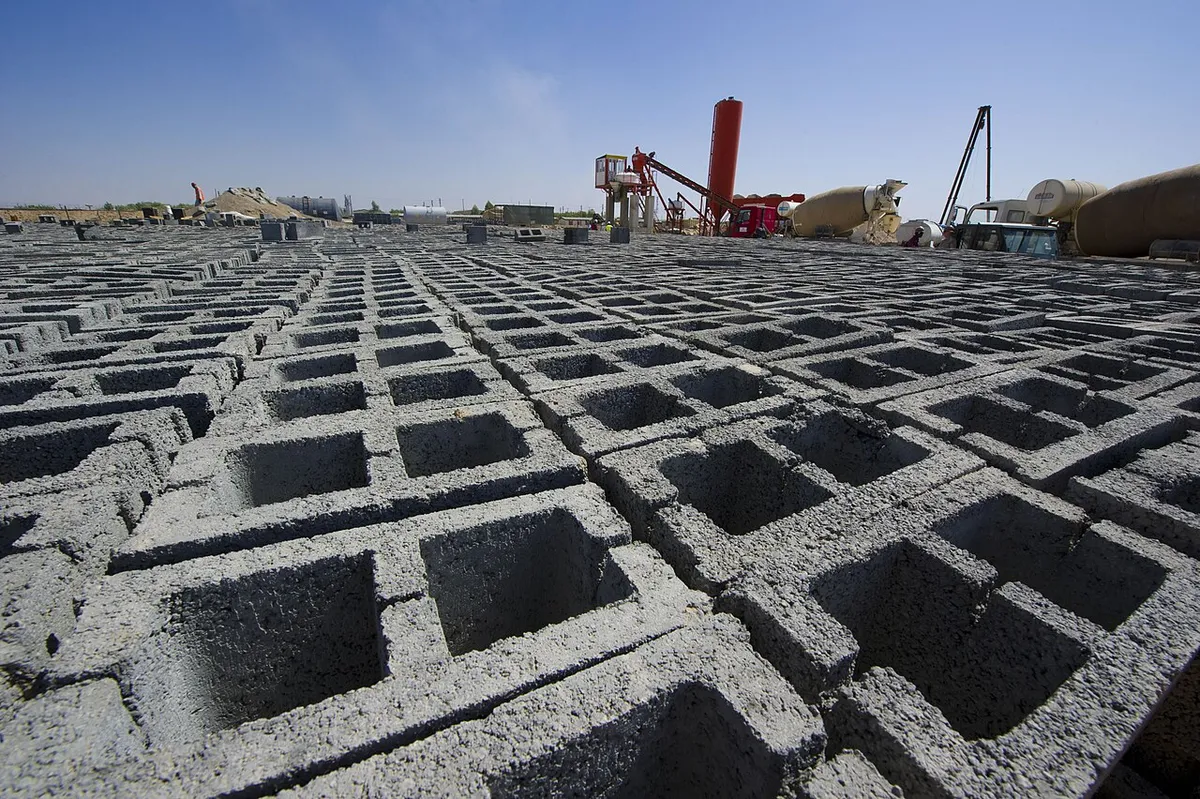
What matters as much as the block is what goes inside it. Vertical rebar carried from the footing up through grouted cells is what gives a fence wall its resistance to wind load, and it is the first thing a low bid quietly deletes. On a standard 6-foot residential wall, the spec to ask for is continuous verticals tied into the footing cage, with the cells at those positions filled solid rather than left hollow behind the face mortar.
Signs Your Block Wall Needs a Contractor
Most block wall repair in San Tan Valley was avoidable a few seasons earlier. Here is what each symptom is actually telling you, so you can judge whether you are looking at a Saturday of tuck-pointing or a footing problem.
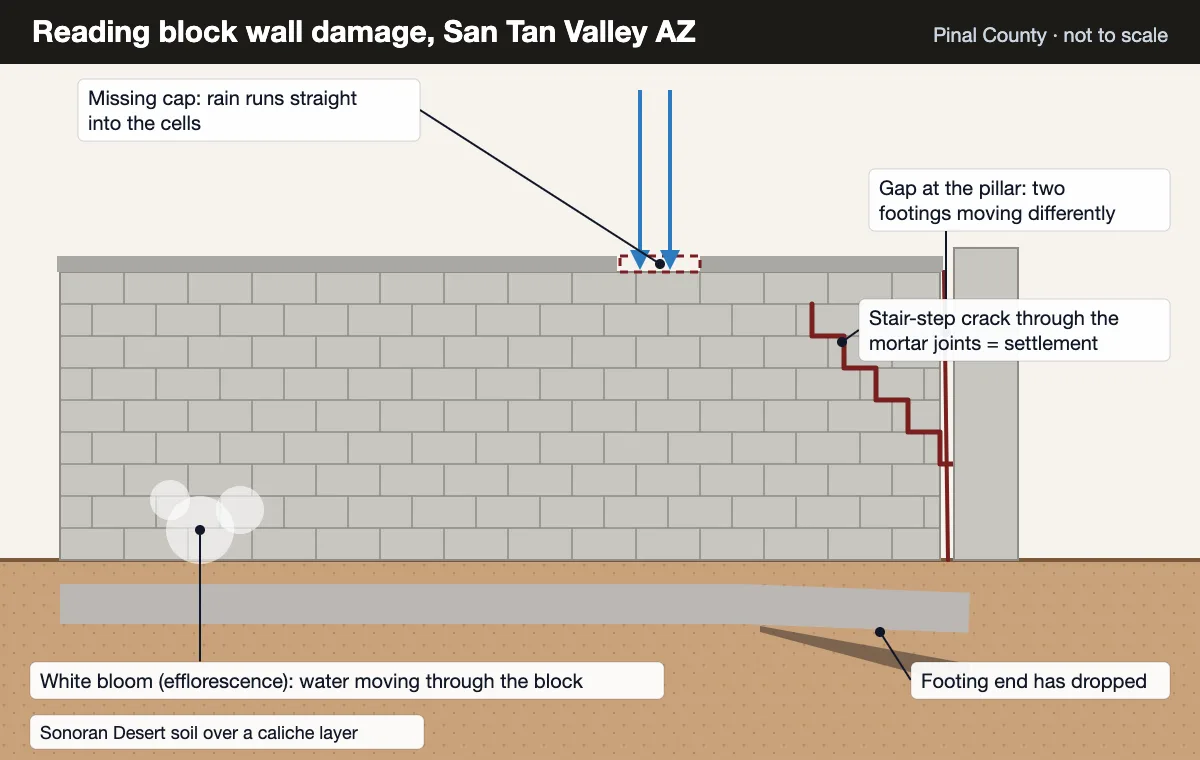
Differential settlement under the footing. One end of the wall has dropped relative to the other. Almost always a footing depth problem, not a mortar problem.
The footing has rotated or moved laterally. Common where the footing was poured directly onto the caliche shelf instead of through it into stable soil.
Efflorescence. Water is moving through the block and carrying dissolved salts to the surface. The stain itself is cosmetic. The moisture path behind it is not.
The cheapest failure to fix and the most expensive to ignore. An open top course lets monsoon rain straight into the cells, where it washes out grout fines and corrodes the rebar.
Two elements on separate footings moving at different rates. Usually the pillar footing is shallower than the wall footing next to it.
UV exposure and thermal cycling have broken down the joint. Tuck-pointing restores it. If it is widespread on a wall built in the last ten years, the mortar mix was wrong.
How a Block Wall Job Runs in San Tan Valley
Six steps from the first phone call to the final walk-through. The two that separate a thirty year wall from a five year wall both happen before a single block is laid.
Site walk and caliche probe
The run gets walked and measured, grade change across the lot gets checked, and the caliche shelf gets probed for depth. That probe is the biggest single driver of what your footing costs, so guessing at it over the phone is how a quote turns into a change order.
HOA and permit check
Your CC&Rs decide which block, color, texture, and cap profile is allowed, and the wall height decides whether a Pinal County permit is needed. Up to 7 feet from finished grade it does not, though only walls of 6 feet or less may sit on a side or rear lot line. Over 7 feet, or a retaining wall over 4 feet from the bottom of footing, it does.
Flat rate quote
One number for the finished wall, not a per-foot rate that moves the day the excavator hits hardpan. The quote states footing depth, block spec, rebar and grout schedule, cap, and finish in writing.
Layout and excavation
String line layout off the property pins, then trench to a minimum of 30 inches, breaking fully through caliche into stable native soil. Spoil gets hauled off, not spread across the rest of your yard.
Footing pour and cure
Rebar cage set and tied, concrete placed and leveled, verticals set at the correct spacing for the wall height. The footing cures before any block is laid. In summer that means early morning pours and a real cure window, not a same-day stack.
Block, grout, cap and finish
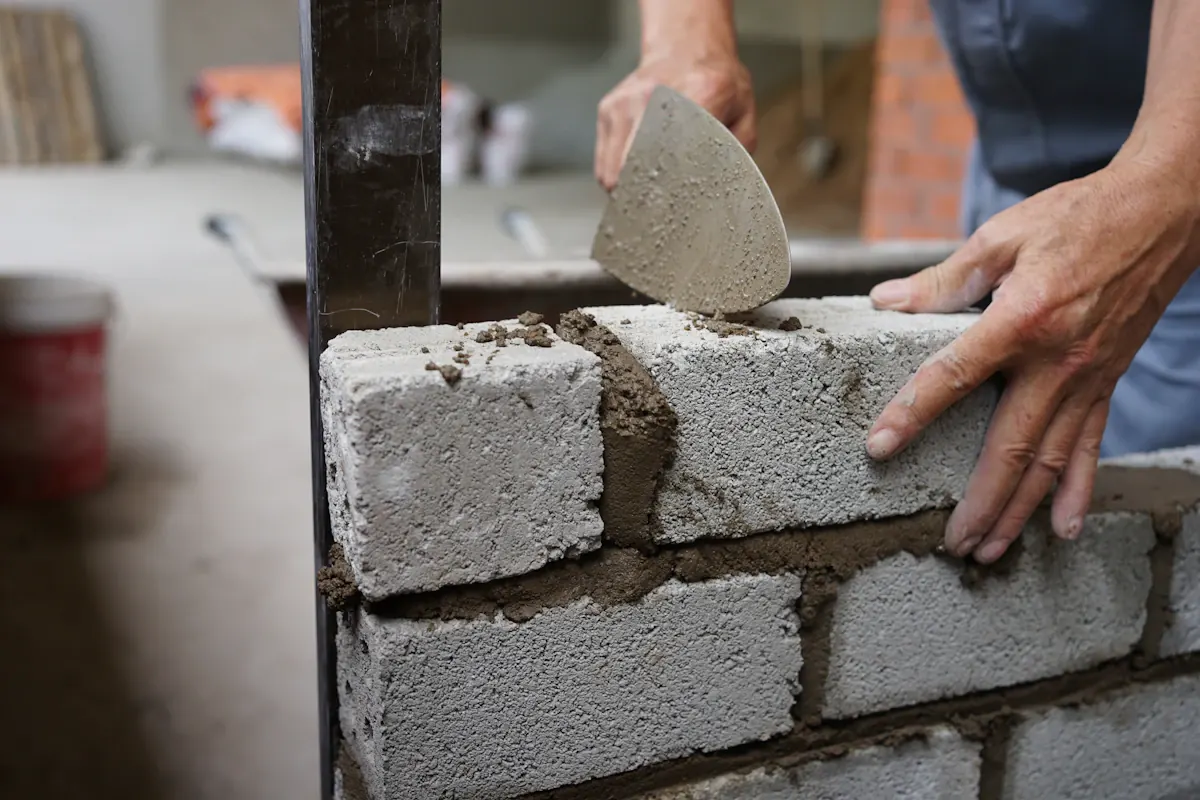
CMU laid course by course with consistent joints, cells grouted solid where the design calls for it, cap block set on the top course, then stucco or texture coat if your HOA specifies it. A final walk-through closes out the job.
What a Block Wall Costs in San Tan Valley
Real ranges for this market, not national averages. San Tan Valley prices run above the national figure for two local reasons: caliche excavation adds labor to every footing, and summer heat compresses concrete pours into early morning windows that cost crew time.
| Scope | Height | San Tan Valley Range | Notes |
|---|---|---|---|
| Standard gray CMU fence wall | 4 to 5 ft | $55 to $110 / lf | Basic block, standard cap |
| Standard gray CMU privacy wall | 6 ft | $90 to $180 / lf | Most common San Tan Valley spec |
| Split-face or decorative block | 6 ft | add 25 to 40% | Over comparable gray CMU |
| Stucco or texture finish coat | any | add $4 to $8 / sq ft | Per face, both sides if HOA requires |
| Caliche excavation surcharge | any | add $3 to $8 / lf | Depends on hardpan depth |
| Typical 200 lf rear perimeter | 6 ft | $12,000 to $25,000 | Finish and soil dependent |
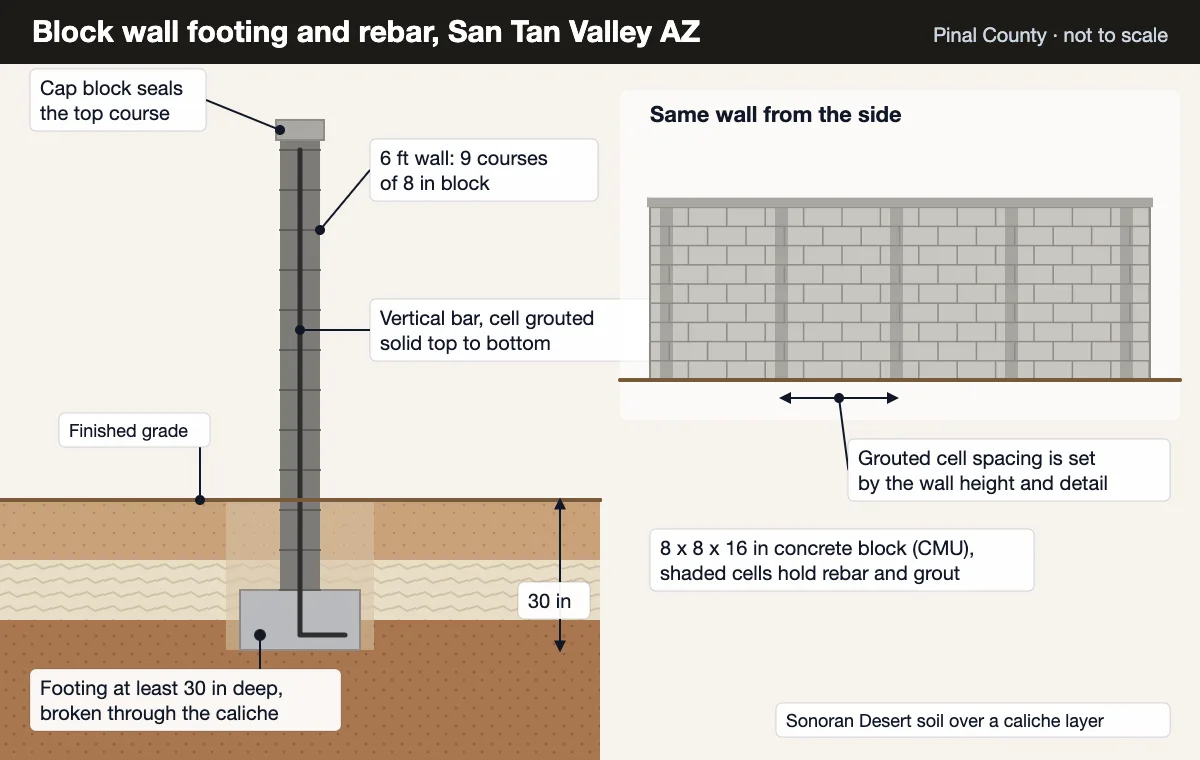
The most useful question you can ask any block wall contractor bidding your job in Pinal County: how deep are the footings, and do you break through the caliche shelf? A quote that comes in well under the range above has usually answered that question by not digging. You will not see the difference for three or four years.
Full Block Wall Cost Guide →San Tan Valley Communities We Cover
San Tan Valley is not one uniform place. Wall age, HOA finish standards, lot grade, and the type of work needed all shift noticeably from one master plan to the next.
Johnson Ranch
The original San Tan Valley master plan and still the largest, roughly 6,071 homes spread across more than three square miles, platted from the mid 1990s onward. The oldest walls out here are now approaching thirty years, which is why Johnson Ranch generates more repair and cap replacement work than new construction. Several of the villages call for a tan toned split-face block, so a gray CMU patch on a visible run will not pass architectural review.
Encanterra and Trilogy
A gated country club community of roughly 2,400 homes with both 55 plus and all ages neighborhoods. Finish standards are tight here. Most walls are stucco coated in a specified color, so a repair is as much a finish matching job as a masonry job, and the architectural submittal is not optional.
Circle Cross Ranch
Central San Tan Valley, heavily built out during the 2000s boom. A lot of these walls went up fast at peak build-out, and shallow footings from that era are a common cause of the cracking and leaning seen here. Lots are generous enough that RV gate work is common too.
San Tan Heights and Copper Basin
North and west of the core, closer to the San Tan Mountain side. Grade change across lots is more pronounced here than in the flat central subdivisions, so retaining walls and stepped footings show up far more often than they do in Johnson Ranch.
Skyline Ranch, Pecan Creek and The Meadows
Newer production neighborhoods where the builder wall is already in place. Work here skews toward additions rather than perimeters: courtyard walls, side yard returns, gate pillars, planter and seat walls, and extending an existing run to close off a side yard.
Ironwood Crossing and the Queen Creek line
The northern edge, where San Tan Valley runs into Queen Creek and the county line. Wash adjacent and greenbelt lots here commonly carry a view fence requirement rather than solid block on the rear line, which changes both the price and the approval path.
Serving San Tan Valley and the East Valley
Pinal County and eastern Maricopa County. Call if you're not listed below.
Block Wall Resources for San Tan Valley Homeowners
Real pricing, permit rules, and soil facts specific to Pinal County, not national averages.
How Much Does a Block Wall Cost in San Tan Valley?
Actual per-linear-foot pricing for standard CMU, 6-foot walls, split-face block, and full perimeter projects in San Tan Valley and Pinal County.
Read Guide →Soil GuideCaliche Soil and Block Walls in Pinal County
What caliche is, why it causes walls to crack, how deep footings need to go, and what to ask a contractor before signing.
Read Guide →PermitsBlock Wall Permit Requirements in Pinal County AZ
When you need a permit, when you don't, HOA rules, engineer requirements for taller walls, and the official Pinal County sources.
Read Guide →Block Wall Contractor San Tan Valley AZ: Frequently Asked Questions
Do I need a permit for a block wall in San Tan Valley?
How much does a block wall cost in San Tan Valley?
Why do block walls crack in Arizona?
How deep do block wall footings need to be in San Tan Valley?
What is the difference between standard CMU and split-face block?
Are cinder block and concrete block the same thing?
Are the block cells filled with concrete?
How long does it take to build a block wall in San Tan Valley?
Who handles the HOA architectural submittal?
Can a damaged block wall be repaired without tearing the whole thing down?
Does the monsoon actually damage block walls?
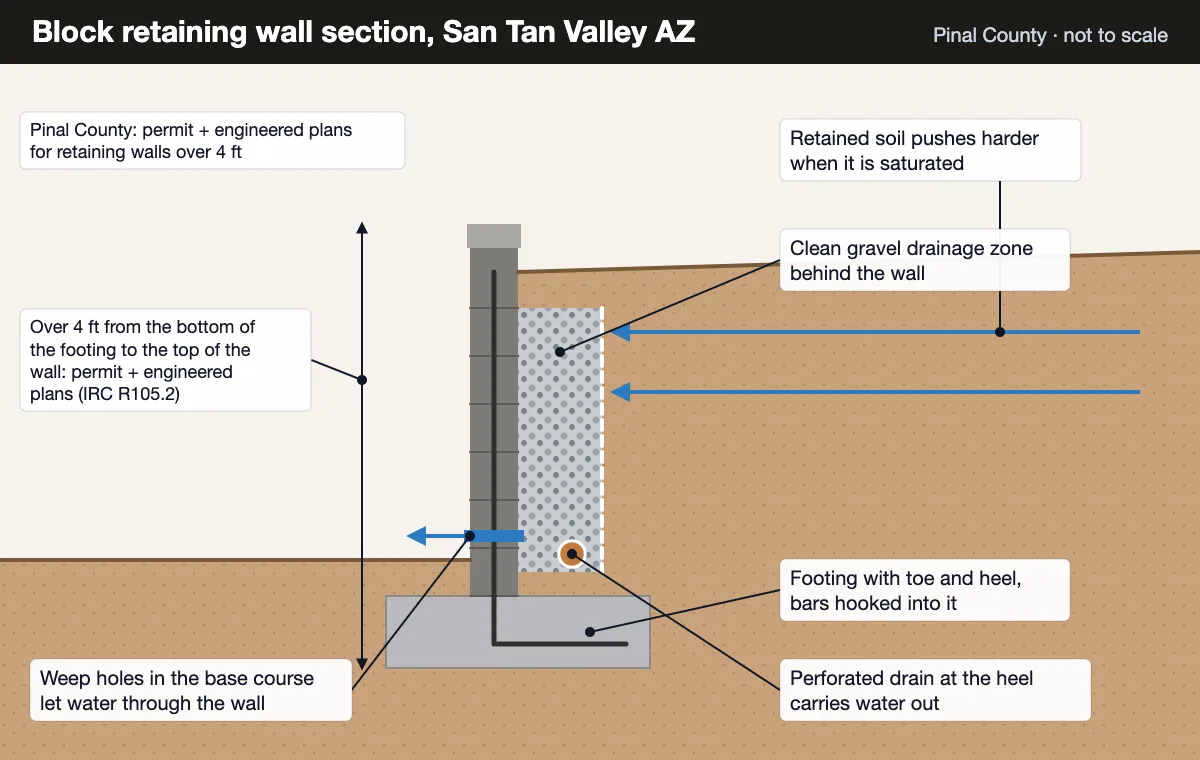
Do I need drainage behind my wall?
Can you paint or stucco an existing block wall?
Should I use a block wall or a wood fence in San Tan Valley?
What license should a block wall contractor in Arizona hold?
Do you work outside San Tan Valley?
Call now or request a free on-site estimate. No pressure, no charge.