Retaining Wall Construction in San Tan Valley, AZ
CMU retaining walls for slope stabilization, grade changes, and landscaping features throughout San Tan Valley and Pinal County.
Retaining Walls Built for Arizona's Expansive Soil
Retaining walls in San Tan Valley face a specific challenge. Parts of Pinal County, particularly in low-lying areas influenced by the Gila River basin, have sandy soil mixed with expansive clay. This clay swells significantly when wet during monsoon season (July through September) and contracts in the dry months. The movement creates lateral pressure behind retaining walls that can push them off alignment or crack them at the footing.
Proper retaining wall design in this area requires engineered footings, adequate drainage behind the wall (crushed rock backfill with drain pipe), and weep holes at the base to relieve hydrostatic pressure after monsoon rain. Drainage should be part of the design from the start, not an afterthought.
Retaining walls over 4 feet tall measured from the bottom of the footing require a permit in Pinal County plus engineer-stamped plans. When a wall crosses that line, ask who prepares the engineered plans and who pulls the permit before you sign.
Retaining Wall Applications
Hold back soil on sloped lots to create usable flat areas, protect foundations from erosion, or stabilize embankments along driveways and property edges.
Step-down tiered planting areas and decorative garden walls. Common in newer San Tan Valley homes where rear lots have graded slopes from subdivision development.
Walls designed to redirect or slow sheet flow during monsoon rainfall. San Tan Valley receives concentrated rainfall during the monsoon season, and uncontrolled sheet flow erodes soil and undermines structures.
Walls at property boundaries where adjacent lots are at different grades. Common in newer San Tan Valley subdivisions where pad grading creates elevation differences between lots.
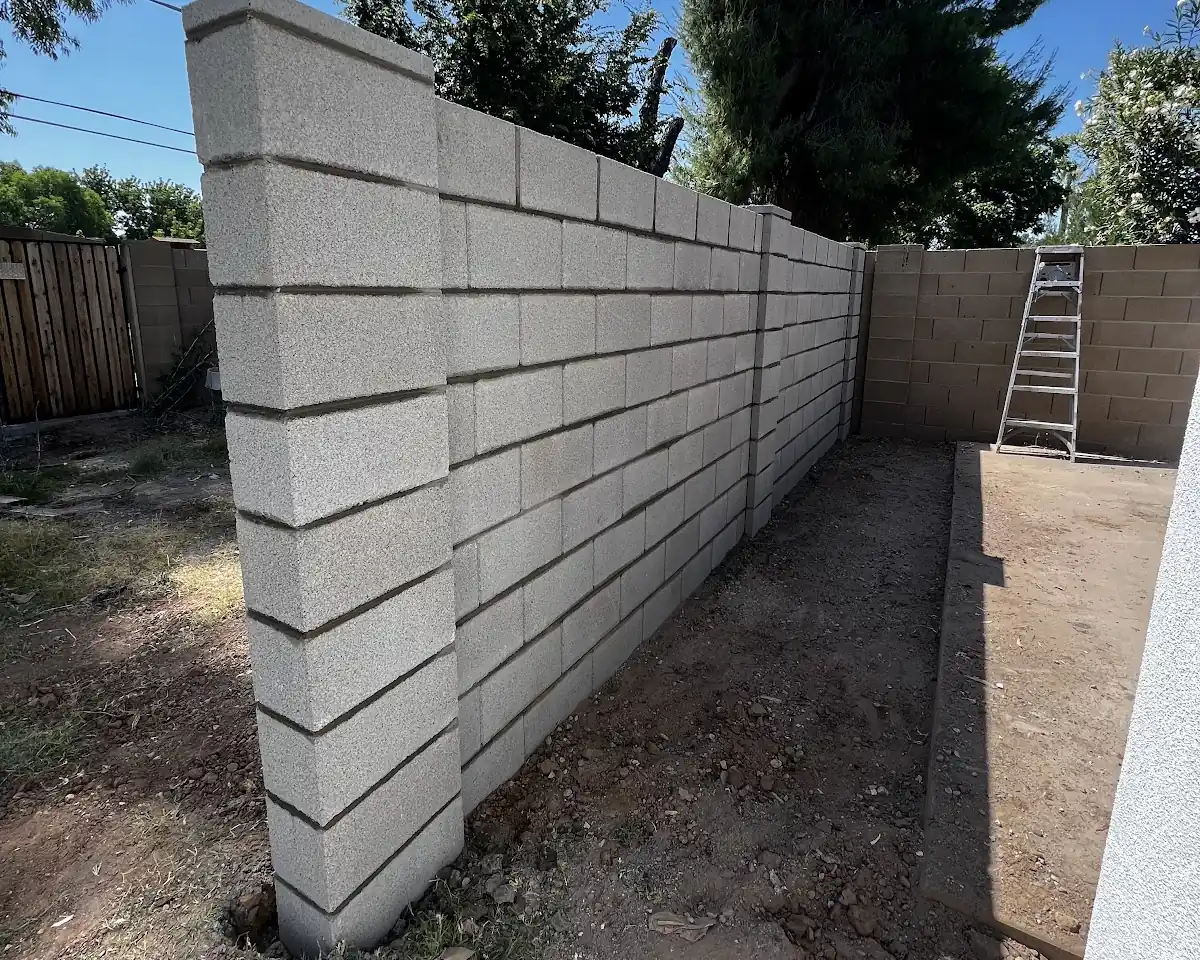
Recent project from our featured contractor
A new CMU wall from our featured contractor's own job photos, with pilasters at the end and midway along the run.
The ladder is still standing in the far corner and the soil along the base has not been landscaped yet.
A retaining wall starts from the same block, then adds steel and grout in the cells, a heavier footing and a drainage layer behind it, because it holds back soil instead of just standing.
Signs a Retaining Wall Is Failing
Retaining walls rarely fall over without warning. Catch these early and the fix is usually drainage and partial rebuild rather than a whole new wall:
- The top of the wall leaning out toward the low side, even slightly
- Bulging partway up the face, or a horizontal crack along a mortar line
- Stair-step cracks that open wider after each monsoon
- Weep holes that never drain, or white mineral staining across the face
- Soil washing out at the base, or the ground behind the wall sinking
Most of these trace back to water: saturated soil behind a wall weighs far more than dry soil, and a wall with no way to drain carries that weight every storm. For cracked or leaning walls, see block wall repair in San Tan Valley.
Questions to Ask Before You Approve a Retaining Wall Quote
- How tall is the wall measured from the bottom of the footing, and does that need a permit and engineered plans?
- What goes behind the wall: how much crushed rock, and where does the drain pipe outlet?
- How deep is the footing, and does it reach firm soil below any caliche or loose fill?
- Which cells get steel and grout?
- Where will water go after it leaves the wall, and will it end up against my house or my neighbor's?
Permit Requirements for Retaining Walls in Pinal County
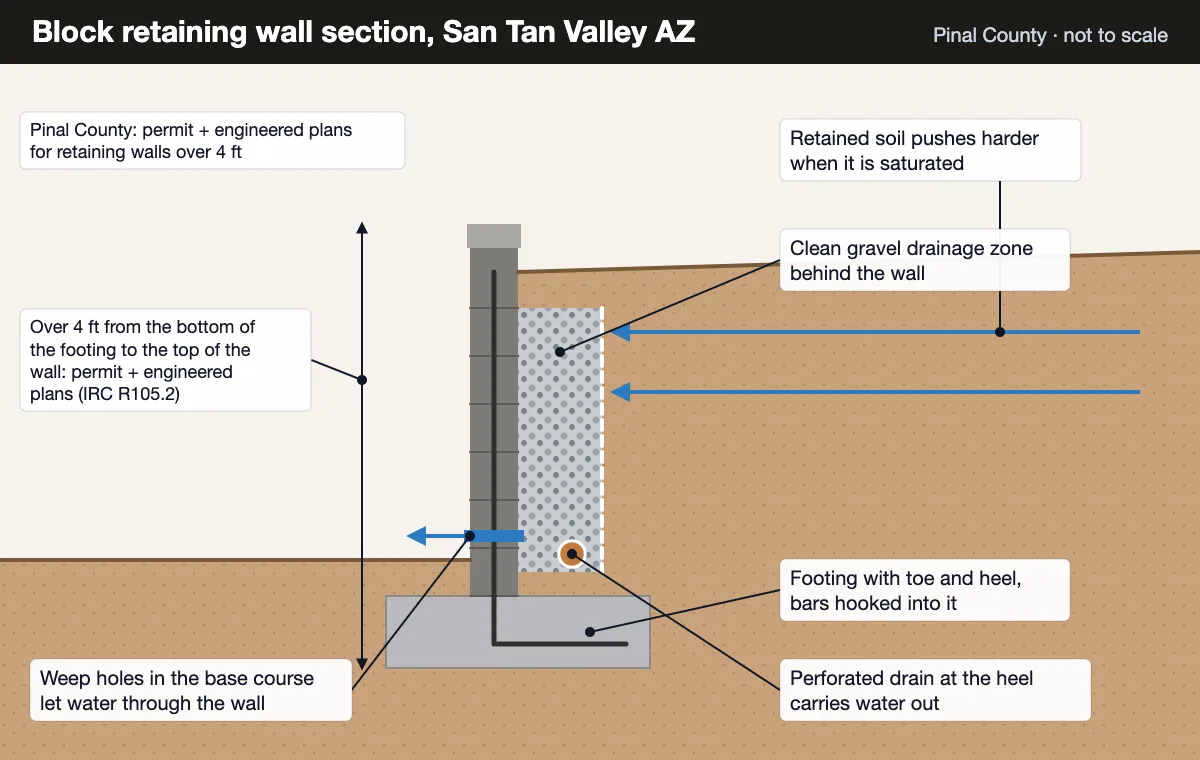
Retaining walls over 4 feet in total height, measured from the bottom of the footing to the top of the wall, require a Pinal County building permit and plans stamped by an Arizona Registered Engineer. Most decorative landscape walls under 4 feet do not require a permit. Always verify with Pinal County Building Safety at 520-509-3555 before starting work.
Pinal County Permit Guide →Official source: Pinal County Building Bulletin #14 (PDF)
Retaining wall construction throughout San Tan Valley AZ. Proper drainage and engineered footings.
Get a Free Estimate